المصدر: ذا غارديانtheguardian.com
US army postpones plan to detonate bomb-making chemical amid outcry
20 تشرين الثاني 2026 في 18:39 · 6 د قراءة
.
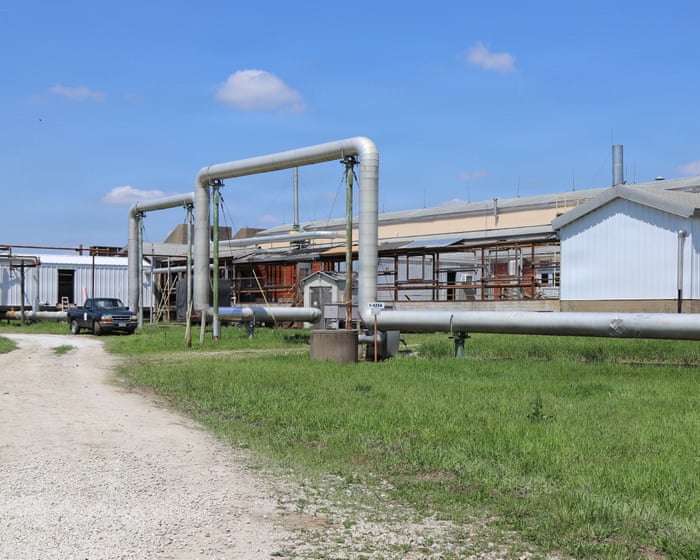
The US army has delayed its plan to detonate a stash of bomb-making chemicals in south-eastern Iowa after an outpouring of public concern that a cloud of lead dust could cause environmental contamination and health problems.
The plan is now to carry it out on Monday.
Kim Reynolds, the governor of Iowa, who was among those who called for the detonation to be delayed as the clock ticked down on Thursday, spoke directly with Adam Telle, acting secretary of the army, her office said. Environmental groups filed a lawsuit earlier in the day, seeking emergency court action to halt the plan.
The army was initially set to blow up about 5 tons of lead azide in Middletown, Iowa, at noon on Friday, a move it described as the safest way to dispose of the highly sensitive compound.
Planning for the detonation at the Iowa Army Ammunition Plant began after staff earlier this year found several dozen barrels containing lead azide that had degraded, “creating a highly unstable and dangerous situation”, according to an emergency permit approved last week by the US Environmental Protection Agency. Moving or relocating it posed an unacceptable risk of accidental detonation, a possibility that increases in cold weather.
“This will delay the detonation until the latest possible moment prior to a forecasted temperature drop, which would risk further destabilization of the material,” Telle said in a post on X announcing the push to Monday.
During the controlled explosion, barrels of the material would be stored inside concrete structures and surrounded by sand-filled Hesco barriers reaching up two storeys high.
Army officials advised certain residents of Middletown to evacuate between 8am and 2pm local time, due to the potential for window damage. The vibrations from the two blasts would not last long but could break old windows in town, and the resulting dust was expected to linger for no more than one hour, depending on wind speed, officials said.
The detonation was also expected to produce a plume containing lead particles.
Officials have released maps showing the potential for lead dust to drift north. Updated maps showed the plume’s shift, and the army will continue to update the map based on weather. Some schools in the path of the plume have already canceled classes.
Nearly 400 people live in Middletown, but there are thousands more in the path of the plume.
While the army recommends cleaning cars, windowsills and outdoor surfaces after the detonation, residents have voice concern on social media and question whether that will be enough.
Iowa’s top leaders appeared to learn about the plan along with the public. Reynolds was first briefed on Monday about the public advisory, her office said.
“An unacceptable lack of communication and clarity has made Iowans understandably concerned and angry about this situation,” Rob Sand, the governor elect, wrote on X on Thursday. “The public deserves to know, if this is the safest option, why other options were worse.”
Telle alluded to the criticism in his Thursday announcement about the delayed detonation.
“Public communication is essential to public trust,” he wrote on X, adding that he was engaging state officials.
Describing the new plan to proceed on MondayTelle said it was the “latest possible moment”, before temperatures drop, which could risk destabilizing the material.
Middletown residents learned in March that the army needed to dispose of several dozen barrels containing lead azide, after the ammunition plant paused operations as part of a review and the degraded material was discovered.
“The safety of our people and our neighbors is non‑negotiable,” Lt Col Daniel Nosse, the commander of the plant, said at the time, acknowledging the volatility of the chemical compound used in munitions production.
The army shared more details during a public meeting in Middletown in October, advising that a detonation was planned for an unspecified date in November. The Environmental Protection Agency (EPA) on 13 November approved an emergency permit, paving the way for Friday’s detonation.
That permit required the army to track specific rates of potential air and dust dispersion and notify the public five days in advance, prompting Sunday’s original advisory to communities as far as 100 miles (160km) away.
Just a few miles north-west, the Danville community school district will close on Friday, the superintendent said in an announcement on Tuesday. Pat Wallace said his initial intention was to keep schools open, but there were enough uncertainties that made canceling “the most responsible decision”.
Many schools throughout the region had already announced closures on Friday and would now have to decide how to proceed on Monday.
Lucy Giehl, her husband and two dogs live just about four miles (6.4km) north of the ammunition plant. She first learned of the detonation on Sunday and was still trying to figure out where she would go during the detonation.
But Giehl, 64, also wondered what happens when she gets home after. She voiced frustration about the lack of information about how to mitigate the risks. Her questions remained on Thursday even after the delay.
“What are they going to do during those three days to help people be better prepared?” Giehl asked, asking whether she needs to wear gloves to wipe down surfaces or to keep her dogs from drinking water in their pond. “There’s just so many details that I feel like haven’t been addressed with the public.”
Environmental groups sued on Thursday in an effort to stop the detonation, arguing that the EPA failed to require the army to consider safer alternatives and that the army failed to give adequate notice of its plans.
The detonation should be canceled outright, not merely delayed, said Wally Taylor, legal chair for the Sierra Club, one of the groups involved in the lawsuit.
“We don’t want the explosion to take place at all,” Taylor said on Thursday after the announcement. “There are ways to do it without all the air quality problems and potential health problems.”
Patrick O’Shaughnessy, a professor at the University of Iowa’s department of occupational and environmental health, said it was encouraging to see that the army and the EPA were doing all they could to minimize the dust, but it was still unknown how much would end up in the atmosphere and on surfaces.
Lead is a neurological toxicant that can decrease brain activity and development, especially in young children, O’Shaughnessy said. He is particularly concerned for toddlers who are at the age of putting everything in their mouth.
According to EPA documents, alternatives such as neutralizing and decomposing the contents of the drums using other chemicals were considered. But officials said any plan that involved handling the drums would increase the probability of accidental, fatal detonation.
Iowa State’s Des Moines county extension field office was busy taking calls on Thursday from concerned residents who have been “deathly afraid” for their health and their animals, said staff member Morgan Hoenig.
“We ran out of soil test kits yesterday,” she said.
المزيد من الأخبار
- ذا غارديانJudge approves $7.25bn Bayer payout to settle claims that Roundup causes cancer
- ذا غارديانBring in ‘cosmetic cowboys’ law to avoid more deaths, says family of butt lift victim
- ذا غارديانVape users hospitalised after losing consciousness, prompting public health warning in New South Wales
- ذا غارديانBaby born with heart abnormalities ‘didn’t have a chance’ after non-medical free birth, NSW inquest hears
- بي بي سي نيوزMassive hope for pancreatic cancer pill after trial saw tumours vanish